For Leadership Teams, Operators & Marketers Scaling with AI
Stop AI Agent Chaos. Start Managing Revenue.
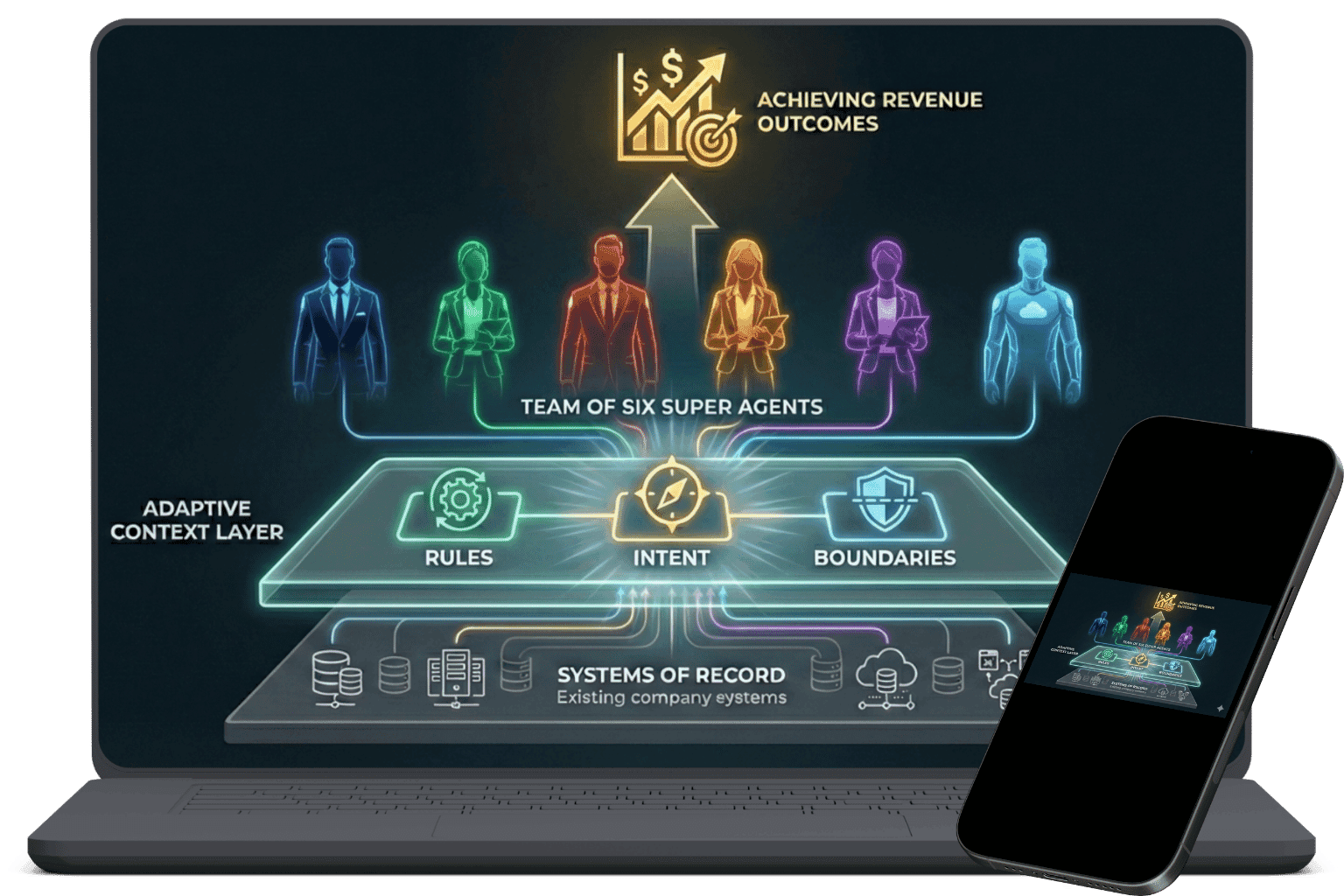
Align agents, workflows, and decisions around shared goals — so AI makes better revenue decisions instead of creating drift, fragmentation, and manual coordination.
VisionList gives you the missing operating layer for AI-native growth. Start your transformation today.
For Leadership Teams, Operators & Marketers Scaling with AI
Stop AI Agent Chaos. Start Managing Revenue.
Align agents, workflows, and decisions around shared goals — so AI makes better revenue decisions instead of creating drift, fragmentation, and manual coordination.
VisionList gives you the missing operating layer for AI-native growth. Start your transformation today.
AI-Native Revenue Is Built On Structural Coherence
As AI adoption increases, most teams drift into fragmentation without realising it. The solution is to make tacit knowledge explicit - structuring intent, trade-offs, rules and boundaries so AI can operate reliably. This is an operating challenge not a technical one.
| Without CoherenceWithout structural coherence | With CoherenceWith structural coherence |
|---|---|
Drift | Explicit intent |
Ad hoc decisions | Defined trade-offs |
Fragmented optimisation | System coordination |
Tool sprawl | Governed boundaries |
Reset cycles | Compounding execution |
Rising coordination load | Structural leverage |
| Drift, sprawl, fragmentationDrift, fragmentation, sprawl | Intent, Structure, Coherence |
Most teams don't realise they're stuck on the left — until they experience the right.
This isn't a tooling problem. It's a coherence problem. The advantage won't come from access to AI — but from how well AI understands your business.
Web Class
How to Build AI-Native Revenue
Without Chasing Tools, Prompts, or Broken Automations
Most AI initiatives stall after early wins. Why? Because teams deploy tools before installing the operating layer that governs them.
In this session, you'll learn:
- Why AI efforts fragment across departments
- The missing layer between models and measurable outcomes
- How leading teams are structuring AI-native revenue systems
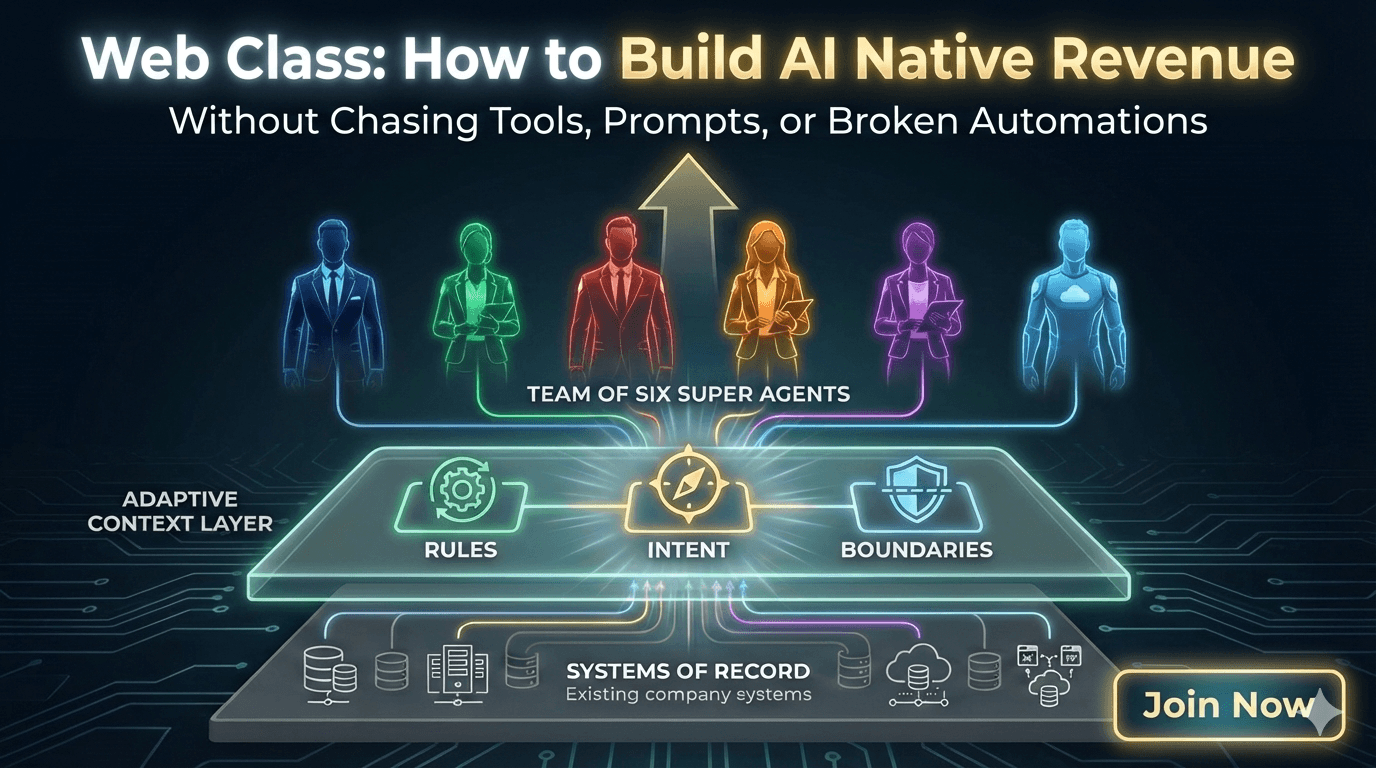
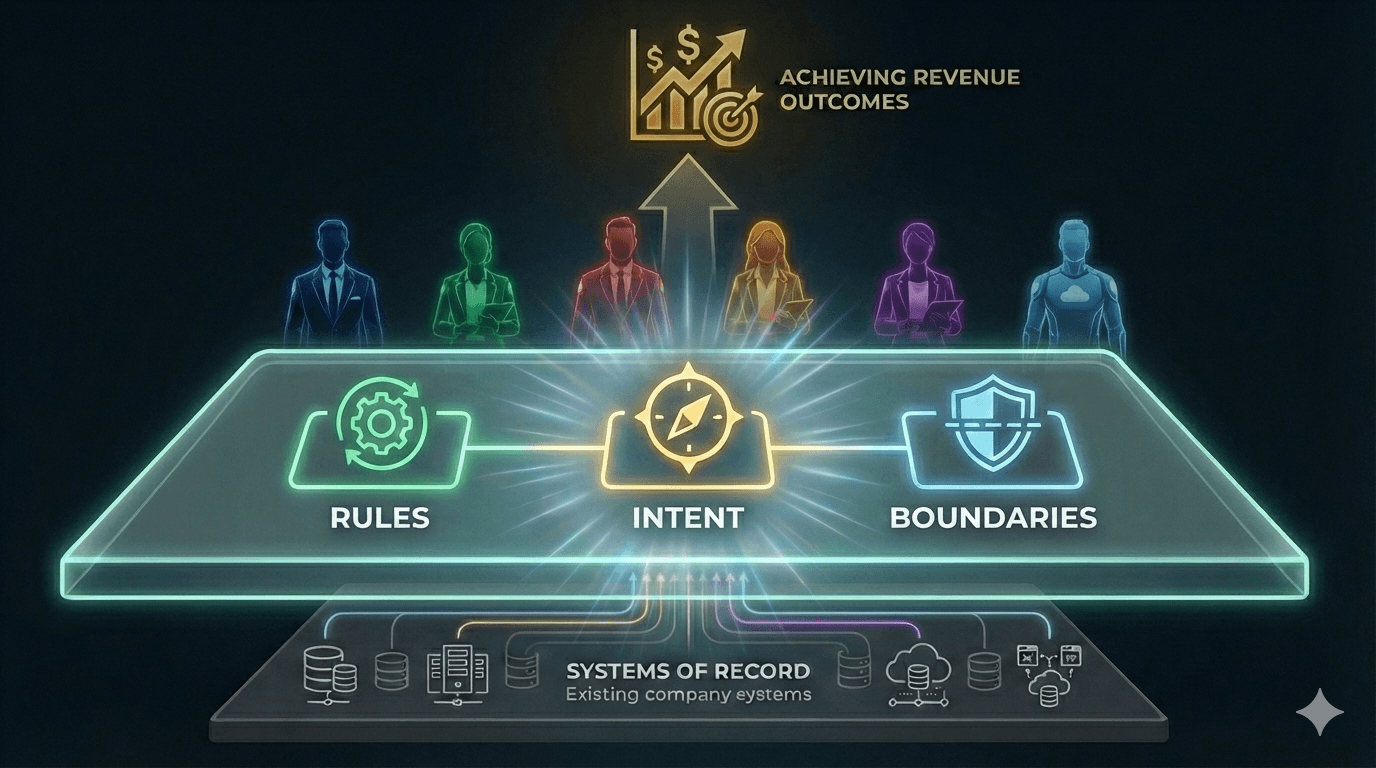
Adaptive Context Layer (ACL)
AI Can’t Scale Without Shared Business Context
AI doesn't fail because it lacks data. It fails because it doesn't understand:
- What matters
- What's constrained
- What trade-offs are acceptable
- What success actually means
VisionList installs an Adaptive Context Layer that captures revenue logic, decision boundaries, and operating rules — and keeps them current over time. So agents don't guess. They execute within governed intent.
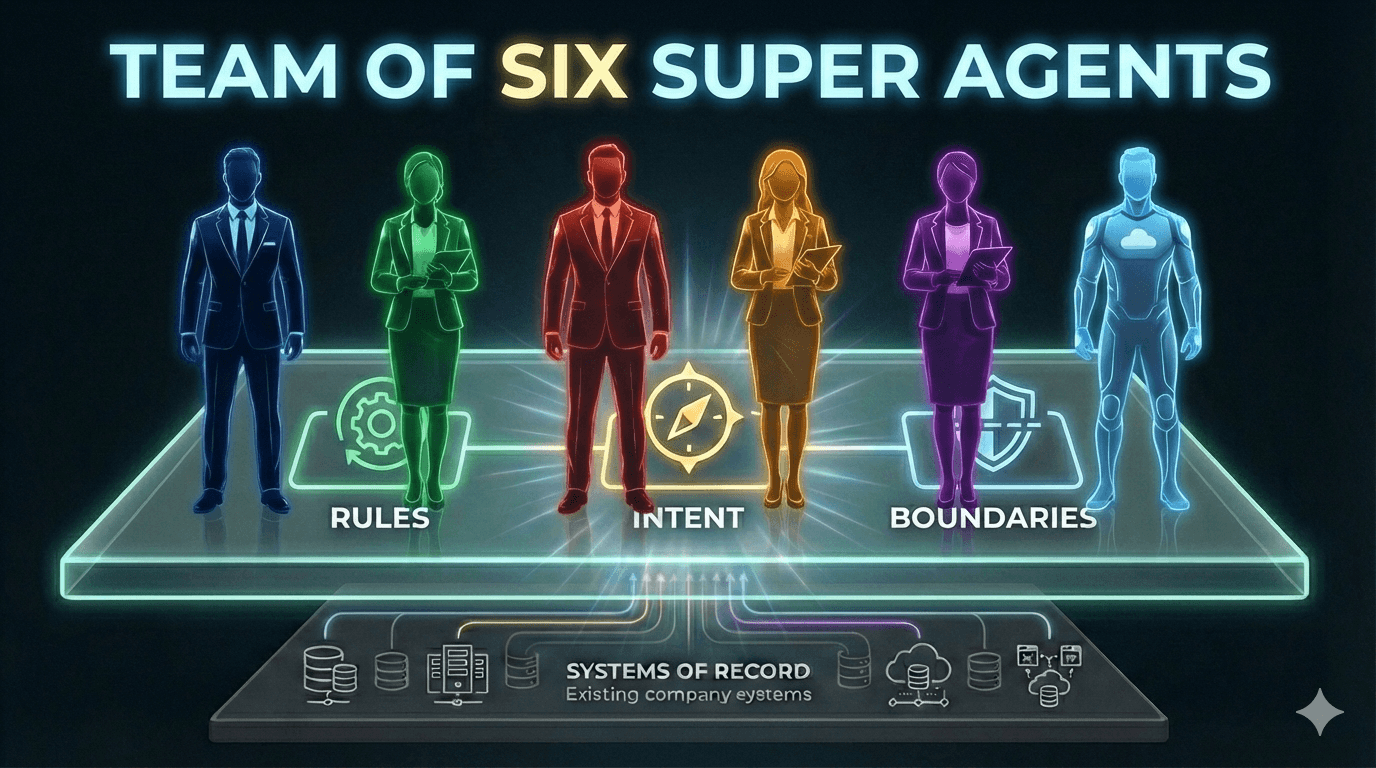
Team of Six (TOS)
Six Super-Agents Govern Execution
Most teams deploy AI agents without ownership, boundaries, or escalation paths. VisionList introduces a Team of Six — each responsible for a core domain: Offers. Demand. Systems. Capital. Platform. Leadership.
Each super-agent:
- Owns a defined decision surface
- Carries a rulebook
- Oversees worker agents
- Escalates when judgment is required
This is how AI execution scales with trust, accountability, and continuity.
VisionList Transformation
Becoming AI-native requires upstream shifts in context management
Context Focus
Relevance with accountability
Clean, shared context that defines what matters — regardless of model or memory
Context Control
Rules for autonomous execution
Clear boundaries that let agents act — and know when to escalate
Context Effectiveness
Continuous alignment and correction
Ongoing iterations that correct drift enabling a process of self-healing
Without these shifts, AI scales activity — not outcomes.
VisionList Transformation Part 1
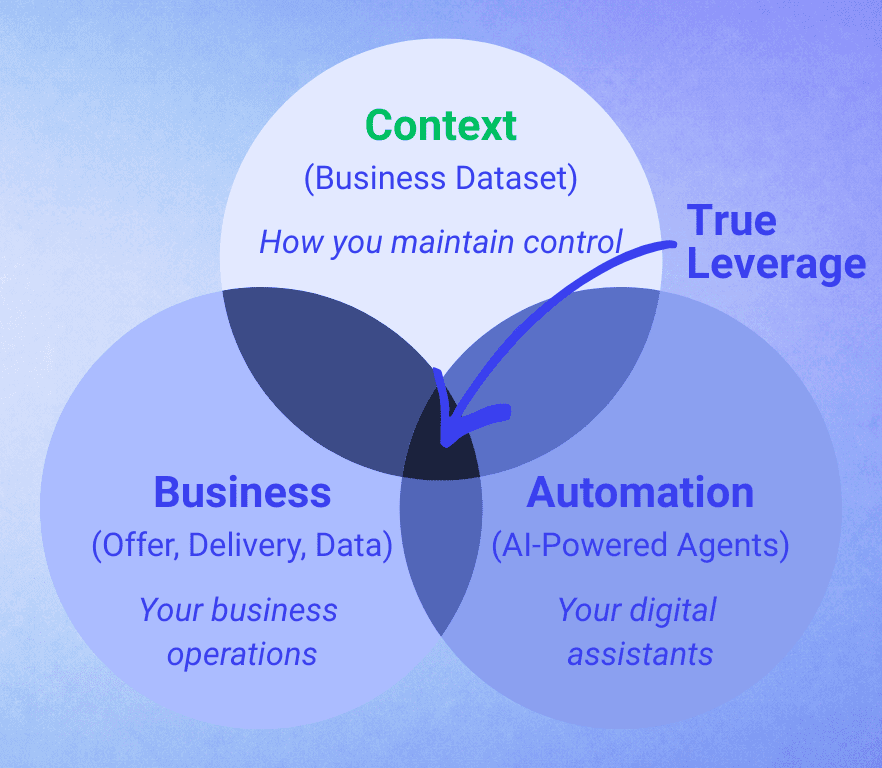
Context is the missing layer between business and automation
Business and automation alone create speed, but not alignment. Context is what connects intent, constraints, and outcomes — turning AI from a productivity tool into a reliable operating layer.

VisionList Transformation Part 2
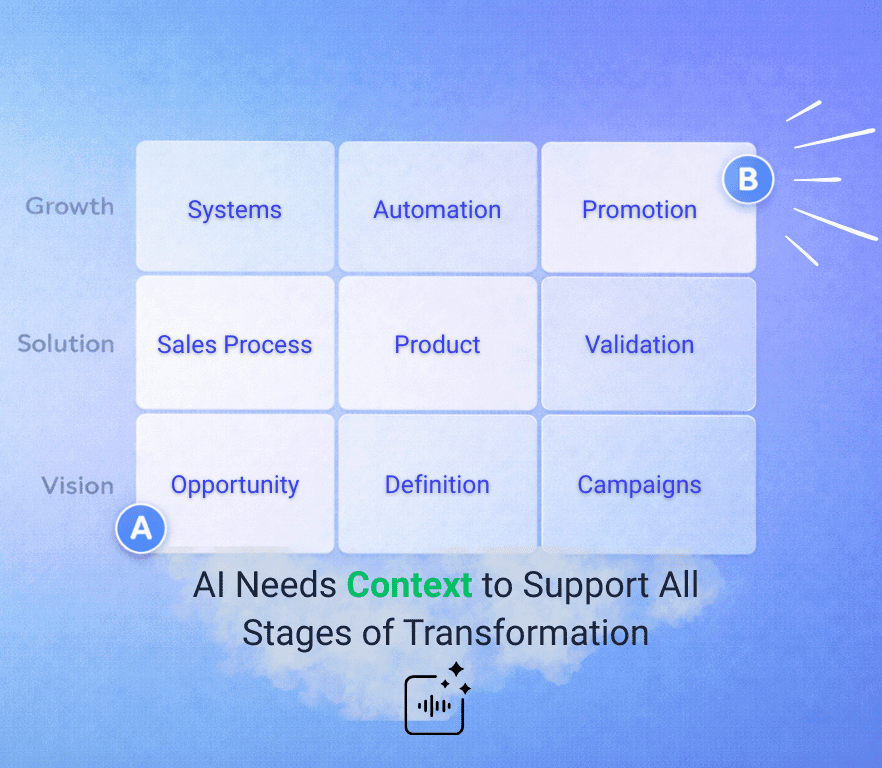
Giving AI context enables AI-supported revenue transformation
It connects where you start with where you’re going — so progress builds instead of resetting, carrying intent forward over time. This is the missing layer between strategy and execution in the AI era.

VisionList Transformation Part 3
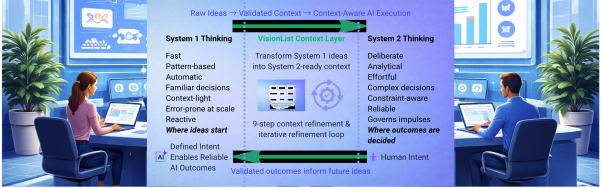
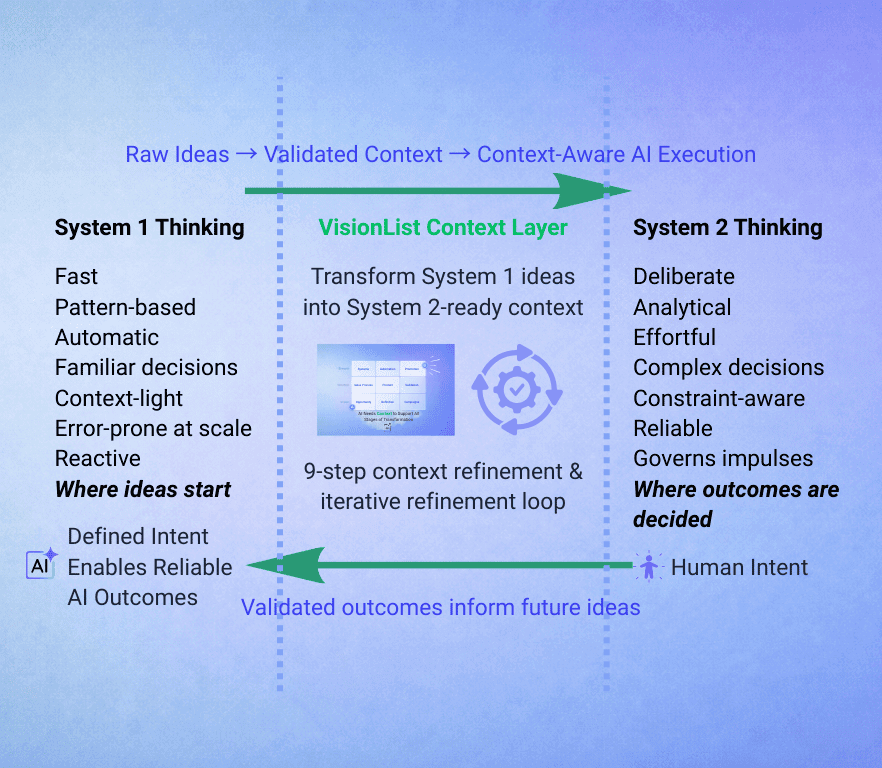
From fast thinking to context-driven outcomes
Most AI failures don’t come from bad models — they come from fast, intuitive thinking that never gets translated into deliberate, validated context. VisionList creates the bridge between System 1 ideas and System 2 decision-making.
VisionList Transformation Part 4
Context convergence requires a new operating role
Independent of which models, agents, or automation tools are used, working effectively with AI requires a new role and set of responsibilities. The Forward Deployed Context Manager (FDCM) is accountable for converging strategic intent, operating rules, and execution logic into a single, coherent context layer.

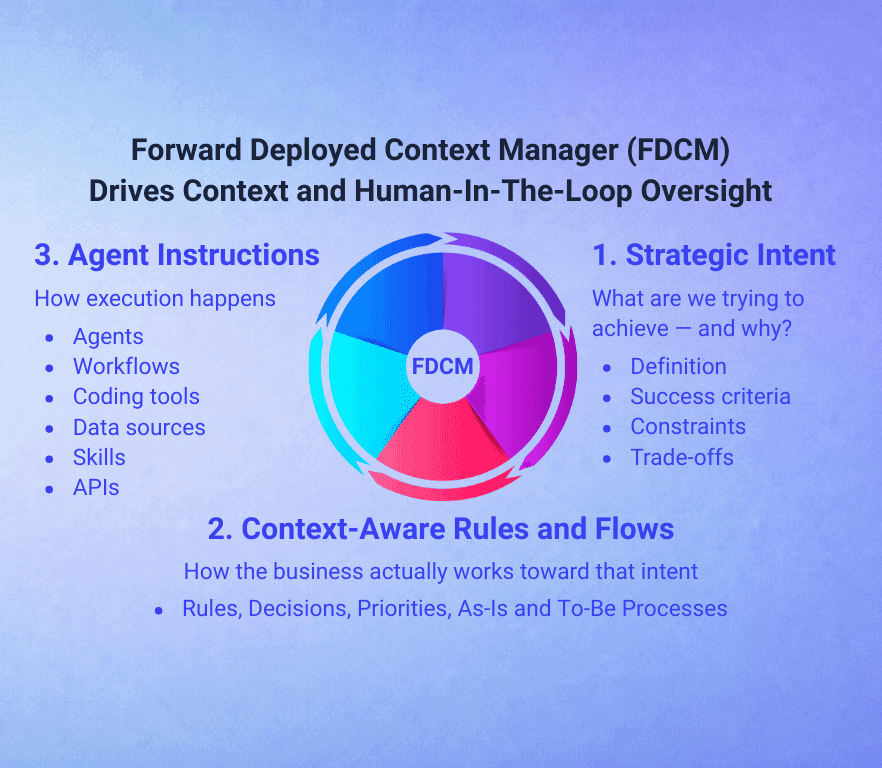
In VisionList, context is expressed and maintained through five living artifacts for each opportunity — VDD, XDD, SCD, EMD, and ARD — which together define measurable goals, vision, operational rules, and how both humans and agents are allowed to act. Managing these artifacts is how intent stays aligned, decisions remain inspectable, and AI execution compounds.
VisionList Transformation Part 5
Context drives better AI decisions — and your KPIs
Most teams try to improve performance by changing tactics: ads, funnels, prompts, tools, or automation. But AI doesn’t improve metrics directly. It improves decisions.
When business context is explicit, AI can reason about trade-offs instead of guessing — and that’s when meaningful improvement becomes possible.
Lower CAC
When messaging, audiences, and offers are aligned to real constraints — not assumptions.
Higher LTV
When AI understands the full customer transformation, retention levers, and long-term value exchange.
Better conversion rates
When positioning reflects real value instead of generic promises.
Faster time-to-market
When teams stop reworking fundamentals and execute against a stable definition.
Lower operational cost
When automation happens after clarity — not before it.
Higher Growth Rate
When improved decision-making compounds across acquisition, delivery, and retention.
VisionList doesn’t promise to “fix” your metrics. It installs the missing layer that makes improving them possible.
Better context leads to better decisions. Better decisions move metrics.
VisionList Products
Context is managed and shared through six connected products
Each product strengthens a different part of your personal brand system. Together, they turn raw ideas into reusable assets that compound instead of fragment.
Product 01
Pulse Generator detects misalignment before it becomes visible
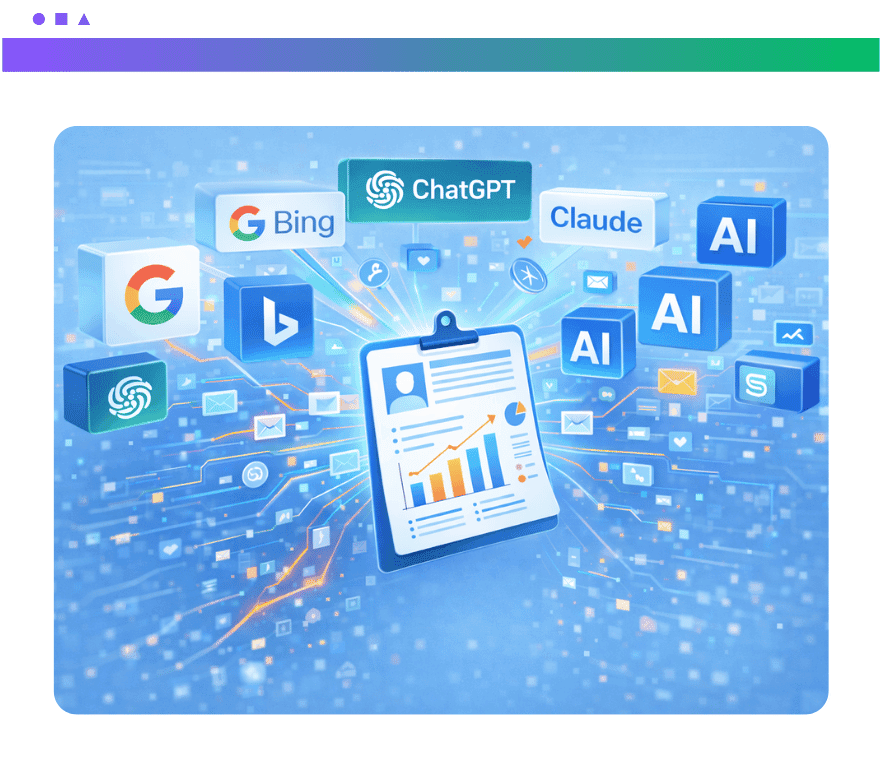
Pulse Generator captures weak signals — ideas, reactions, insights, feedback, and anomalies — as they occur. Instead of losing them to notes, chats, or intuition, VisionList anchors them to defined opportunities and decision context.
What this unlocks
- Early detection of drift before it becomes rework or failure
- Signals tied to defined opportunities, not isolated noise
- Better judgment calls based on live context, not hindsight
- A steady input stream that keeps strategy grounded in reality
Product 02
Vision Pro makes intent explicit before AI executes
Vision Pro helps you define what you are trying to achieve — and why — before AI creates, automates, or optimizes anything. Vision, positioning, value exchange, and success criteria are made explicit so outputs reflect intent, not guesswork.
What this unlocks
- Clear positioning without over-analysis
- Consistent intent across content, products, and initiatives
- AI that reasons from purpose instead of pattern-matching

Product 03
Campaign Creator turns shared context into coordinated execution
Campaign Creator plans and runs launches, initiatives, and experiments using shared business context — ensuring execution reinforces strategy instead of fragmenting it.
What this unlocks
- Goals explicitly tied to messaging, timing, and execution
- Fewer disconnected initiatives and "random acts of automation"
- Momentum that builds across cycles instead of resetting
Product 04
Context Manager governs business rules, decisions, and change over time
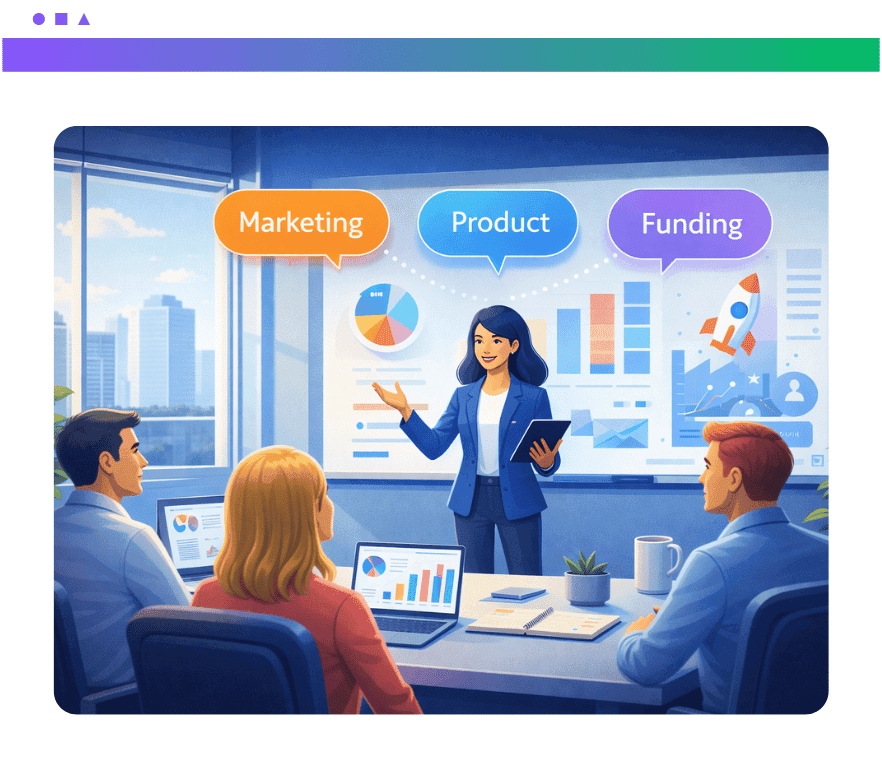
Context Manager is where business logic becomes durable. It maintains the living definitions that both humans and AI must operate within — including intent, rules, constraints, decision boundaries, and process assumptions — and keeps them accurate as the organization evolves. This is where fast thinking becomes inspectable context, and where drift is corrected before it becomes failure.
What this unlocks
- A single, evolving source of truth for business rules and decisions
- Context that stays aligned as strategy, markets, and operations change
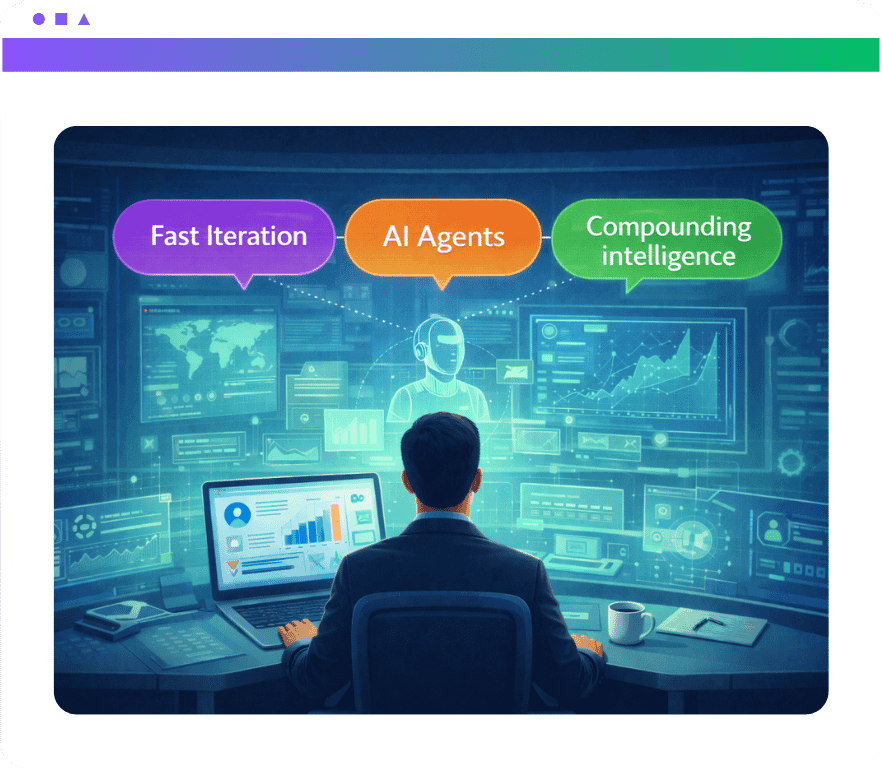
- Faster iteration without losing coherence or institutional memory
- Clear accountability for what changed, why, and when
Product 05
AgentOS turns context into governed execution
AgentOS is the operating interface between your business context and execution systems. It translates human-defined intent and rules into agent-ready instructions — without locking you into any single model, automation platform, or vendor.
This is where Agent Rules Definitions (ARDs) are created, reviewed, tested, and evolved — ensuring agents act within explicit boundaries and escalate when judgment is required. AgentOS supports a clear separation of responsibilities: Business defines the rules, Engineering implements the execution, and AI operates within guardrails.
What this unlocks
- Explicit rules for autonomous agents instead of hidden logic
- Clear handoff between functional design (business) and technical design (engineering)
- Testable, reviewable agent behavior that satisfies governance and audit needs
- Reliable automation that compounds instead of drifting
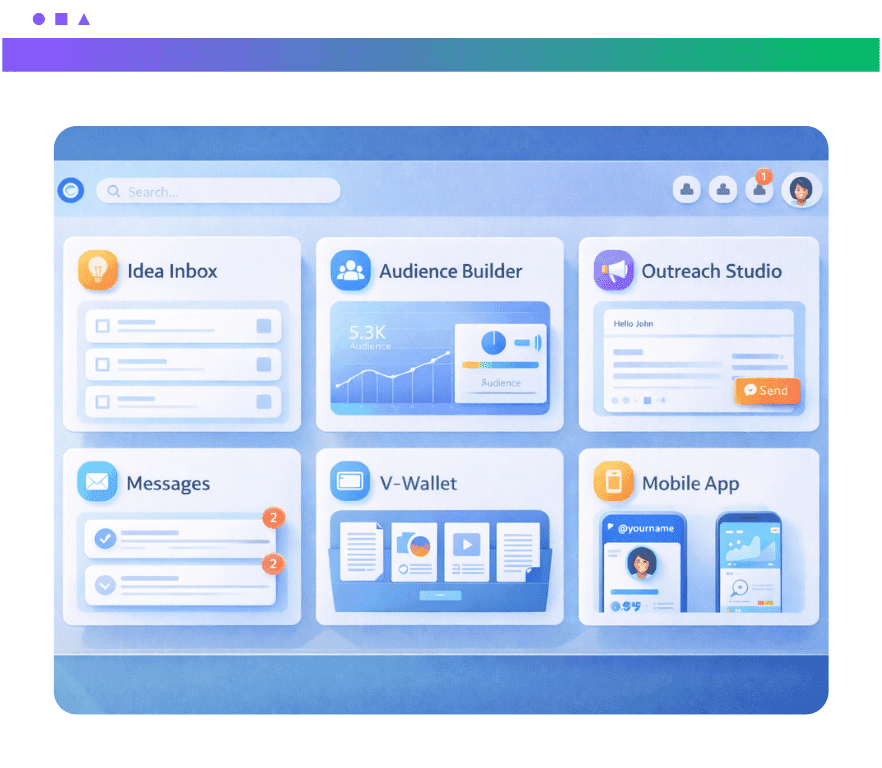
Product 06
V-Wallet™, V-Report™, and V-Go™ extending context across surfaces
V-Wallet packages your Adaptive Context Layer into a portable, versioned asset that can be shared across models, tools, teams, and environments. V-Report presents that same context as an executive-ready decision briefing. V-Go enables mobile, on-the-go interaction with live context. Together, they ensure context travels — without re-explaining, re-prompting, or re-interpreting.
What this unlocks
- V-Wallet — your context passport across AI systems and collaborators
- V-Report — decision-grade reporting for leaders in the AI era
- V-Go — mobile-first visibility and engagement without losing rigor

VisionList is your sandbox for defining precise context and exploring ideas and scenarios
It’s designed to help you refine a primary direction while safely testing alternatives — without losing focus, control, or momentum. A bridge between humans and AI.
In summary, VisionList products generate 3 primary outcomes:
AI-Native Business
Operating layer sets rules and governance before agents scale
Managed Context
Enables faster iteration and compounding growth with leverage
Revenue Growth
AI use cases depend on prioritization, autonomy, and risk control
VisionList is built to explore and support these shifts — without forcing premature automation or lock-in.
Articles and Webinar
Context is the AI-Era "Problem Definition"
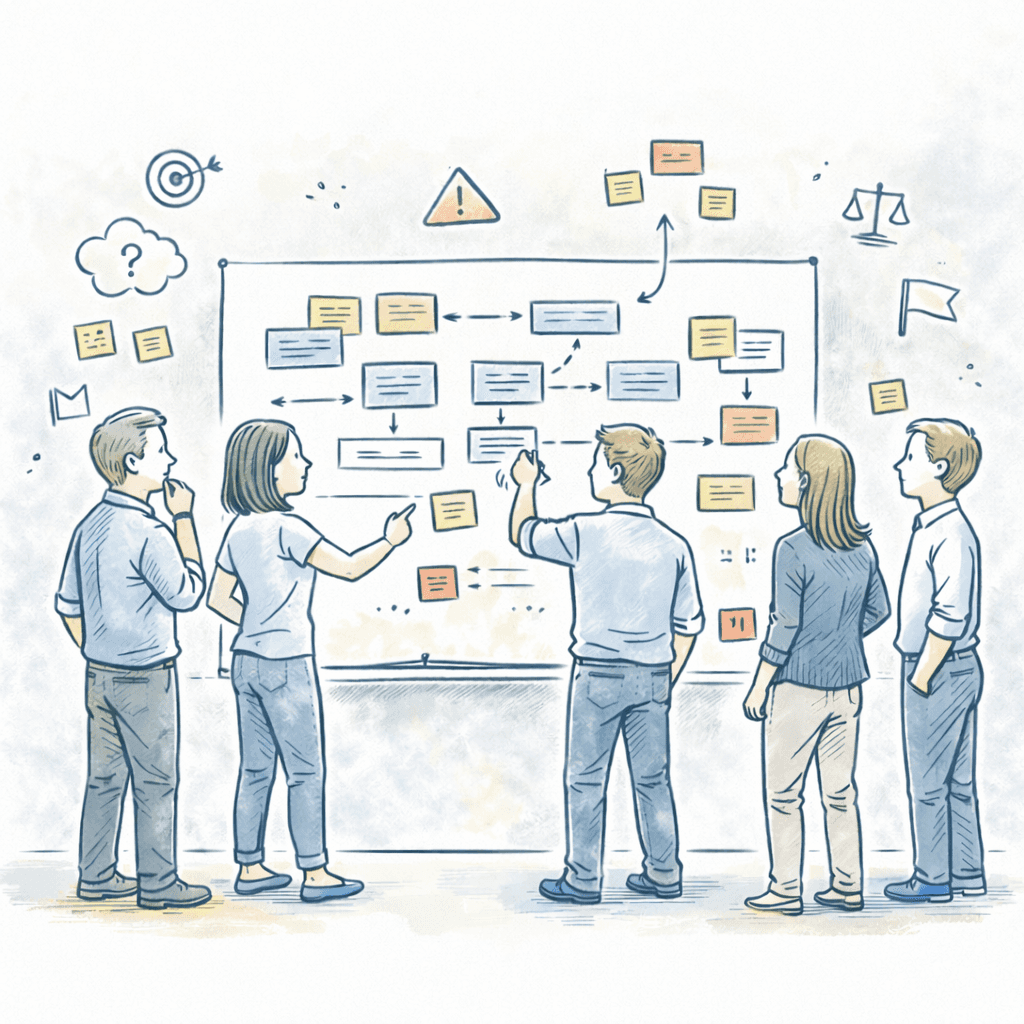
Explains why, in an AI-driven world, context is no longer background information but the full definition of the problem itself — and why it must be built deliberately before automation can work.
AI-Native Data Volume Fallacy
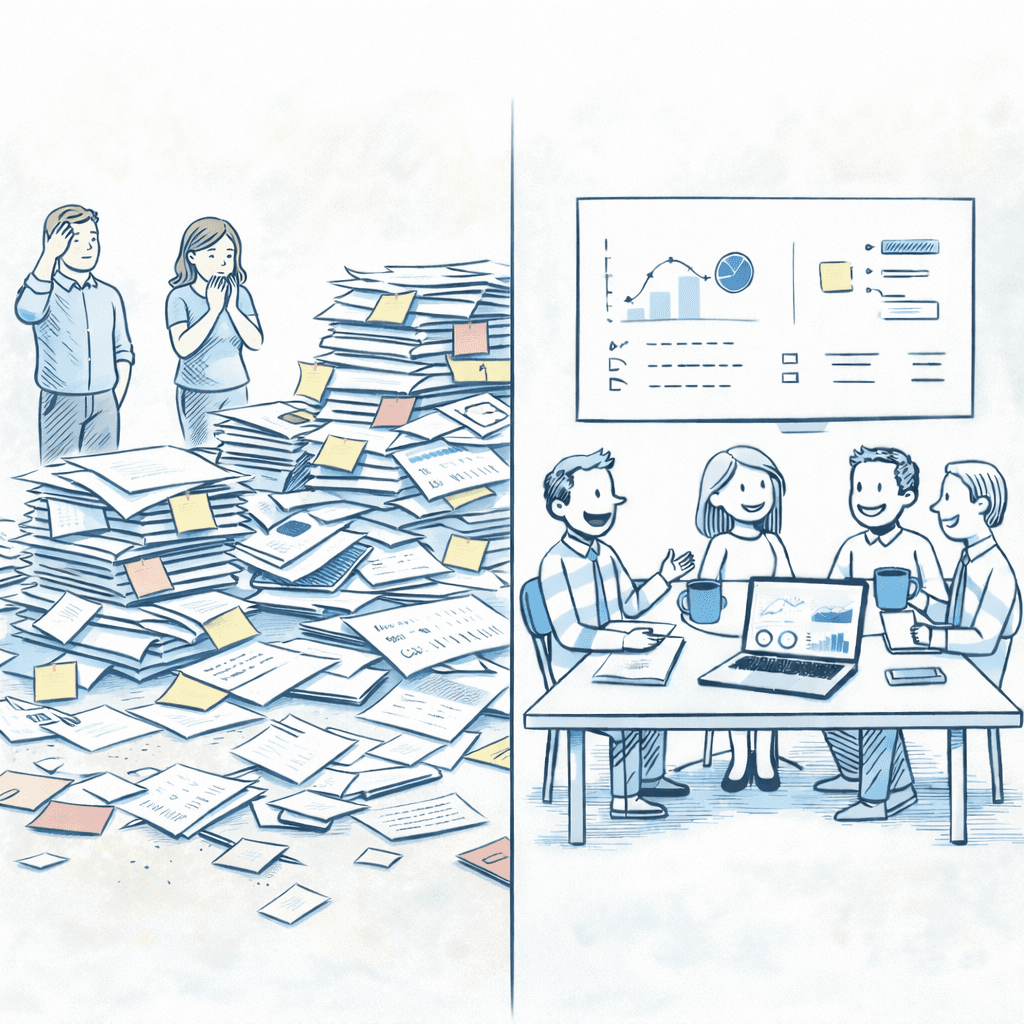
Explores why piles of data and documents don't create clarity for AI, and how alignment and structured context — not volume — enable reliable outcomes.
Why Every Company Needs an FDCM
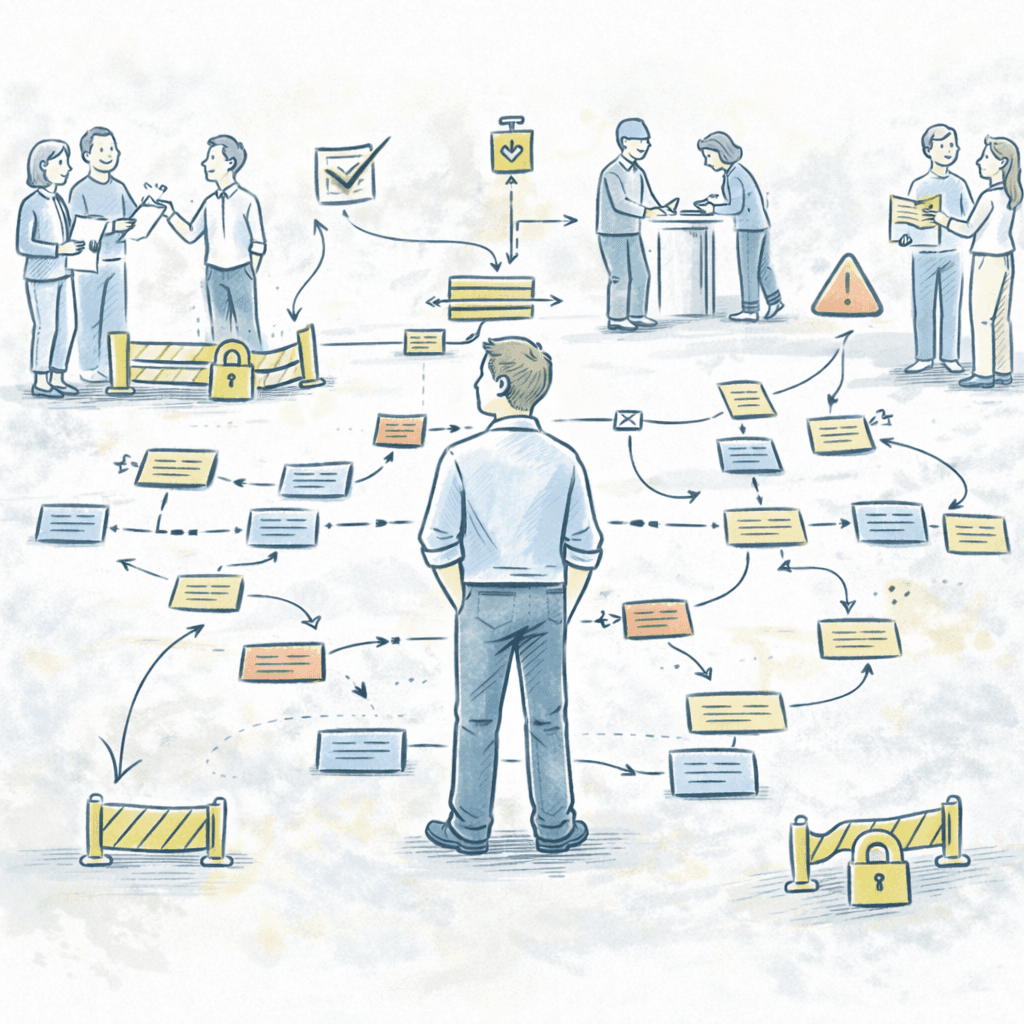
Introduces the Forward Deployed Context Manager (FDCM) as a new operating role needed to translate business intent into explicit, usable context for AI systems.
Why AI Adoption Is Becoming an Operating Model Challenge
Explains why AI adoption is no longer only a tooling decision, but an operating model challenge that requires organizational alignment, context discipline, and continuous adaptation.
Webinar: AI-Native Transformation
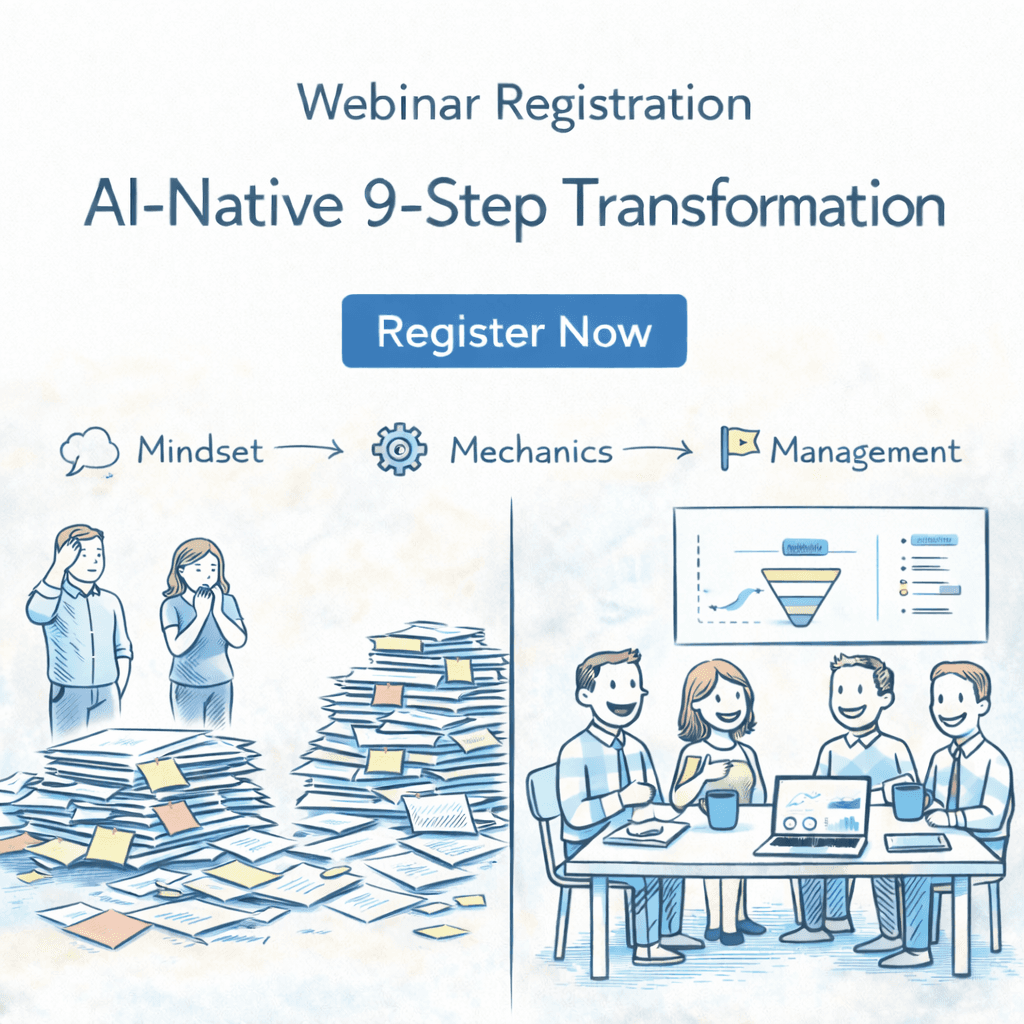
Presents a structured 9-step approach to transforming your organization into an AI-native company through deliberate context management.
Frequently Asked Questions
Short answer: Only where it adds leverage.
VisionList isn't designed to replace your tools or force daily usage. Its role is to define, maintain, and protect business context — so AI, agents, and teams can work reliably.
Some users engage with VisionList daily during active initiatives. Others review or update context weekly or per sprint. The value doesn't come from frequency — it comes from having durable context that compounds instead of resetting.
VisionList works in the background until clarity is needed — then it becomes essential.
Yes — especially if you plan to switch tools over time.
VisionList is model-agnostic. It doesn't replace ChatGPT, Claude, Copilot, or agent platforms — it gives them clear, shared context and rules to work from.
That means:
• fewer resets when you change tools
• consistent outputs across models
• less re-explaining and babysitting
• safer use of automation and agents
Models change. Context shouldn't.
RAG and document ingestion help AI retrieve information.
VisionList helps AI reason correctly.
Most AI failures happen not because information is missing — but because:
• intent isn't explicit
• priorities conflict
• rules are undefined
• trade-offs are invisible
VisionList structures decision context, not just data. It defines what matters, what's constrained, and how execution should behave — even as things evolve.
Context isn't more data. It's shared understanding.
VisionList creates a portable, versioned context layer.
Using V-Wallet, you can share a clean snapshot of:
• vision and intent
• operating rules
• decisions and constraints
• execution boundaries
This lets you:
• onboard new AI systems without rework
• collaborate externally without loss of clarity
• maintain alignment across tools and teams
Think of it as a context passport — not another file dump.
Yes — and that's often where it helps most.
Fast projects fail when:
• decisions stay implicit
• direction shifts silently
• automation happens before clarity
VisionList helps you:
• define intent once
• evolve it deliberately
• decide what should be automated — and what shouldn't
Many users apply VisionList before coding — then derive clearer requirements, rules, and agent instructions from the context they've already validated.
Speed comes from clarity, not skipping steps.
No — and that's intentional.
VisionList sits upstream of automation. It defines:
• what agents are allowed to do
• when they must escalate
• how success is measured
• which rules must never be violated
You can then use any agent runtime, workflow engine, or automation platform with confidence.
VisionList governs execution — it doesn't replace it.
The FDCM is the role responsible for keeping AI aligned with the business.
This role:
• maintains strategic intent
• manages operating rules
• reviews drift and misalignment
• ensures decisions remain inspectable
In some teams, this is a founder or operator. In others, it becomes a dedicated capability. VisionList is designed to support this role explicitly.
AI doesn't remove responsibility — it makes it visible.
The Forward Deployed Context Manager (FDCM) concept is intentionally derived from the well-known Forward Deployed Software Engineer (FDSE) role — but moved upstream into the business layer.
Where FDSEs embed with customers to adapt software and data pipelines, FDCMs embed with the business to define intent, rules, and decision logic before deep technical integration is required. In many cases, assigning an FDCM and using VisionList removes the need for an FDSE early on — because the environment becomes clearer, more stable, and easier to integrate when complexity truly demands it.
Both — and also teams inside larger organizations.
VisionList is used by:
• solo operators shaping direction
• founders scaling execution
• product and marketing leaders
• AI and transformation leads
• executives who need clarity without micromanaging
Because VisionList organizes context by opportunity, not by company size, a startup and an enterprise unit can use it in the same way.
Yes — but through structure, not bureaucracy.
Governance in VisionList comes from:
• explicit rules
• defined escalation paths
• versioned decisions
• inspectable context artifacts
This creates accountability without slowing teams down.
Trust doesn't come from controls. It comes from clarity.
Yes.
You can start independently using the sandbox, or work with VisionList through a Done-With-You (DWY) engagement to install context properly and avoid common pitfalls.
DWY is especially valuable if:
• AI feels busy but unreliable
• direction resets across tools
• agents need constant supervision
• governance is unclear
You can:
• explore VisionList in sandbox mode
• book a discovery call to discuss your situation
• or work directly with VisionList to install context for a real opportunity
There's no obligation — the goal is clarity.
Yes.
If you're exploring AI seriously and want to avoid drift, wasted effort, or premature automation, a conversation is often the fastest way to assess fit.